
.webp)
The Best Muna Island Experiences for Nature and Adventure Travelers
A landscape-led guide to Muna lakes, caves, coastlines, and community experiences for travelers who want more than a beach stop.
Discover the strongest Muna Island experiences for nature and adventure travel, from inland lakes and limestone caves to Meleura Beach and coastal communities.
Muna Island is a strong destination for travelers who want nature to feel varied rather than repetitive. The island experience can move from still inland water to limestone caves, from ancient heritage to an open shoreline, and from a scenic stop to a coastal community whose relationship with the sea is part of the destination. That range gives adventure travelers room to choose their own pace instead of following a single activity from morning to evening.
The best experience is not necessarily the most difficult one or the itinerary with the highest number of stops. It is the route that matches the traveler with the landscape, the physical demands, the current access conditions, and the people who help interpret the place. This guide therefore separates observation, exploration, coastal recovery, heritage, and community encounters so readers can build a more accurate Muna journey.
What Makes Muna Different for Nature Travelers
Muna offers contrast within one destination story. Napabale Lake and the Moko locations create an inland-water rhythm, while Angel Cave and Laumehe Cave introduce enclosed limestone environments. Liang Metanduno adds an archaeological dimension, and Meleura Beach opens the route back toward the coast. Bajau Tribe Village and Sandbar Bajau Village connect the scenery to living maritime communities. These experiences are related, but they should not be advertised as though they all offer the same activity.
For nature travelers, this variety matters because it creates a route with changes in texture and effort. A quiet lake can provide time to observe and photograph. A cave can require careful walking and local guidance. A beach can give the group space to rest, while a village visit asks for attention and consent. The destination becomes more memorable when the differences are protected instead of flattened into one generic promise of adventure.
The Best Muna Experiences Begin with Inland Water

Napabale Lake is a useful starting point for travelers who want to understand Muna through landscape rather than speed. Tourism descriptions connect the lake with surrounding hills and a natural relationship to the sea. That relationship makes the stop more than a place to take a quick photograph. It gives visitors a way to notice how water, rock, elevation, and the coast belong to one wider setting.
The Moko locations add further options for an inland-water route. Moko Lake, Moko Panjang, and Moko 2 appear as separate names in the project data and should remain separate in editorial and itinerary planning. Their exact access, facilities, and suitable activities require local confirmation. A guide can help the group decide whether to combine them, visit one in depth, or use them as flexible alternatives when weather or road conditions change.
Quiet Water Is Still an Outdoor Experience
Adventure travel is often described through movement, but a lake can be an important outdoor experience precisely because it slows the group down. A still-water landscape allows travelers to observe reflections, surrounding rock, vegetation, paths, and signs of local use. It can also create a useful pause between transfers. The point is not to invent swimming or boating activities where the available information does not verify them.
Travelers should ask how the lake is currently accessed, whether the shoreline is used by residents, and which areas are appropriate for visitors. Keep the group away from private activity, avoid leaving waste, and follow local guidance about water access. A careful lake visit can be both visually rewarding and respectful of the place’s everyday function.
Angel Cave and the Feeling of Exploration
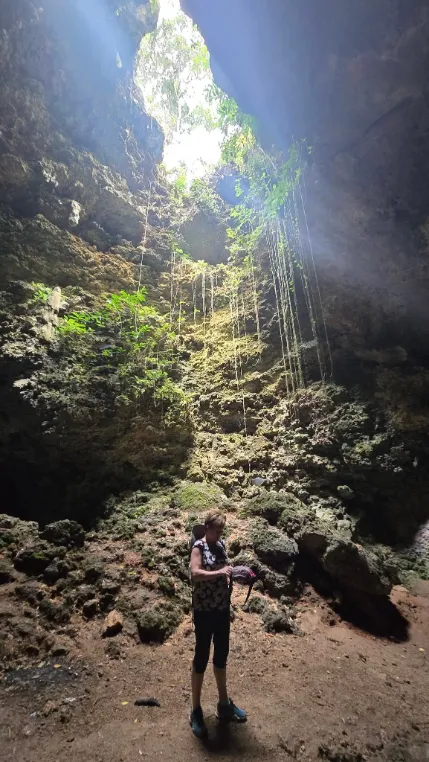
Angel Cave gives a Muna route a stronger sense of exploration because the group moves from open landscape into an enclosed limestone environment. The experience should be approached with practical footwear, attention to uneven ground, and respect for the guide’s pace. A cave photograph cannot establish whether the approach is easy, wet, narrow, or suitable for every traveler, so those conditions need to be confirmed before departure.
The value of Angel Cave is not only the feeling of entering a different space. It is also the opportunity to notice how light, rock, sound, and movement change the way a landscape is experienced. Keep the group together, avoid touching surfaces, and do not assume that every cave has lighting, rails, toilets, or other facilities. Adventure becomes more enjoyable when preparation is part of the experience.
Laumehe Cave and the Need for Local Guidance
Laumehe Cave offers a separate cave experience from Angel Cave and should not be reduced to a duplicate label. The project data and dedicated image assets identify it as its own destination. Travelers who enjoy natural formations and guided exploration may find it valuable, but the route, ground condition, duration, and physical demand must be checked with a local operator.
The order of cave visits should remain flexible. Rain, access conditions, group stamina, and guide availability can affect whether Laumehe is best visited before or after another natural attraction. A responsible guide should explain where visitors may walk and which surfaces must remain untouched. Do not remove stones, disturb formations, or leave food or waste inside the cave.
Liang Metanduno: Adventure with Heritage Responsibility
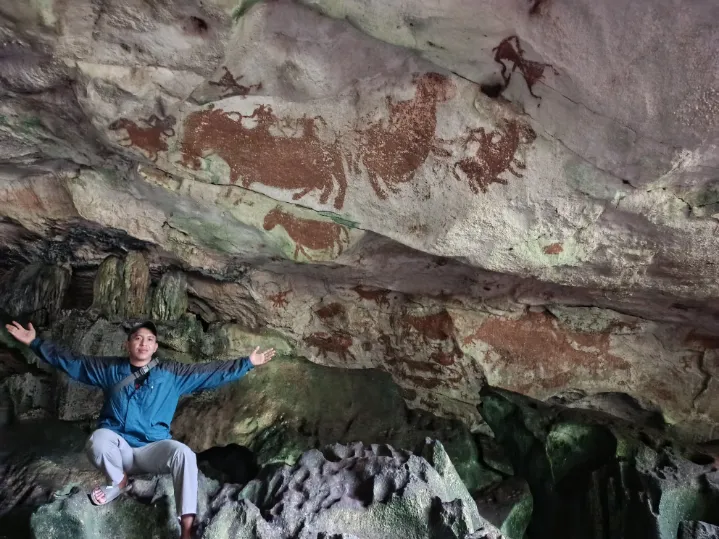
Liang Metanduno changes the meaning of adventure because the cave environment contains evidence that requires protection and careful interpretation. Nature research published in 2026 reported a minimum-age constraint of about 67.8 thousand years for a studied hand stencil, based on dating calcite overlying the motif. The finding is significant, but it must be described precisely: it concerns the studied evidence and does not establish that every image in every Muna cave has the same age.
Visitors should treat the site as a heritage encounter, not as an unrestricted photography location. Follow access instructions, ask about flash and equipment, and never touch, wet, mark, scratch, or lean against rock-art surfaces. The most meaningful adventure here is learning how a fragile record of human expression can survive in a landscape that still needs responsible visitors.
The Wider Cave Landscape Around Muna
Liang Kabori and other cave areas help place individual destinations within a wider Muna karst landscape. Academic research identifies cave and shelter environments with different rock-art motifs, which means that the heritage story cannot be reduced to one image or one simplified claim. Each named site needs its own evidence, access rules, and interpretation.
For travelers, the wider landscape provides context rather than a reason to force more stops into one day. Ask a guide which locations are open, which are natural attractions, which have documented heritage, and which require special protection. That distinction improves both the accuracy of the article and the quality of the visit.
Meleura Beach as a Recovery Experience
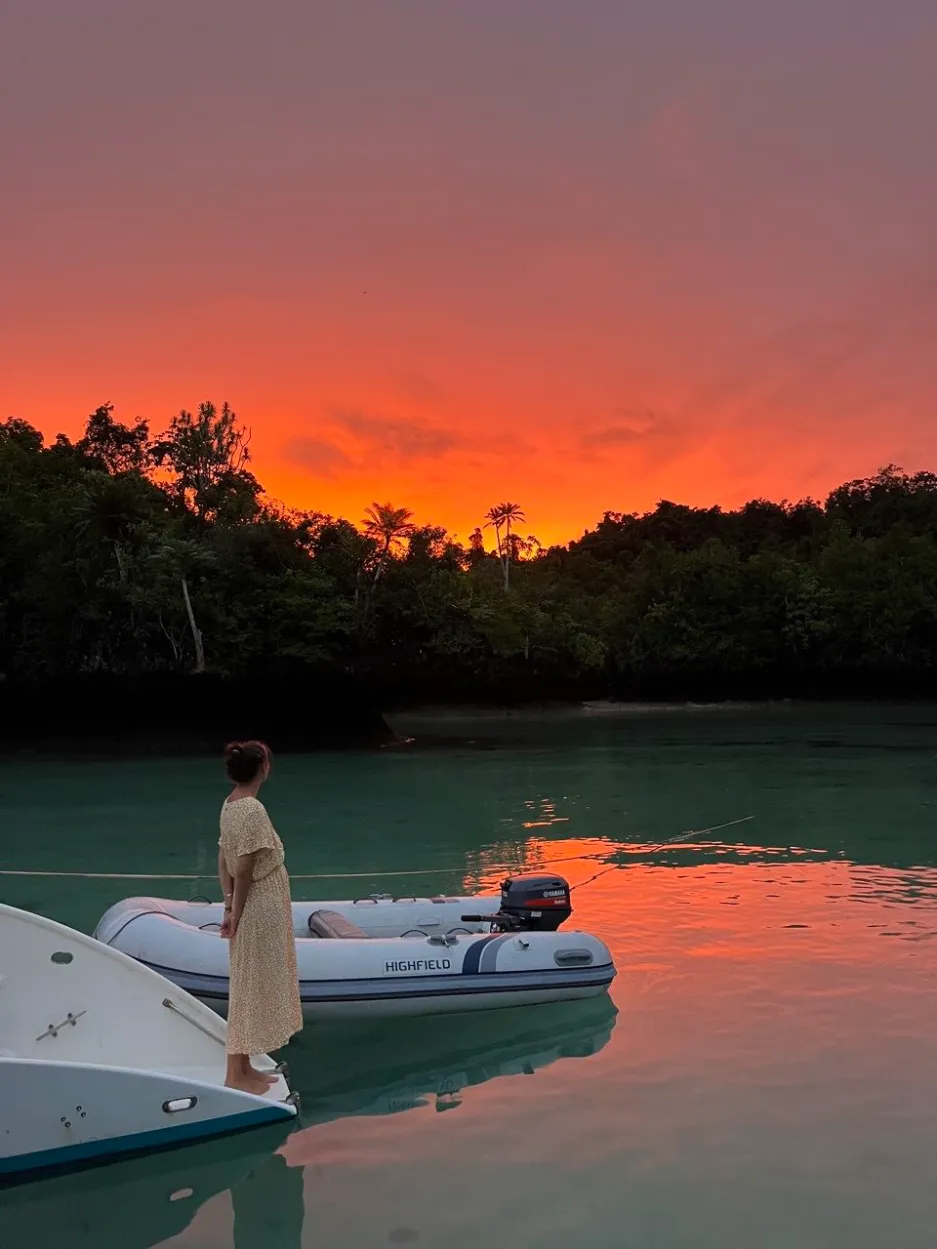
Meleura Beach gives an adventure itinerary a different kind of value: recovery. After a cave or inland route, the shoreline provides open space, a change of light, and time for the group to rest. JADesta describes the Lakarinta tourism setting through clear seawater, white sand, karst rock, facilities, and community attractions. The coast therefore has both physical scenery and a social setting.
Research on Meleura assessed separate beach stations and recorded different suitability results. Those results belong to the study context and should not become a permanent promise about every visit or every activity. Confirm water conditions, facilities, local rules, and permitted activities before advertising swimming, snorkeling, or boating. A beach remains valuable through scenery, conversation, photography, and rest even when a particular activity is unavailable.
Coastal Karst and Outdoor Observation
The karst coast is a natural subject for travelers who enjoy geology, landscape photography, and quiet observation. Rock formations change the shape of the shoreline and help explain why the coast looks different from a uniform resort beach. Notice how water, sand, exposed rock, vegetation, and settlement meet, but do not climb or move across formations unless local managers identify the route as appropriate.
Outdoor observation should not be confused with unrestricted access. Loose rock, slippery surfaces, tides, and weather can create risks that a photograph does not show. Stay within guidance, protect vegetation, and keep equipment secure near water. The landscape is worth observing because it is real and sensitive, not because it can be rearranged for a better image.
Bajau Villages and Maritime Experience
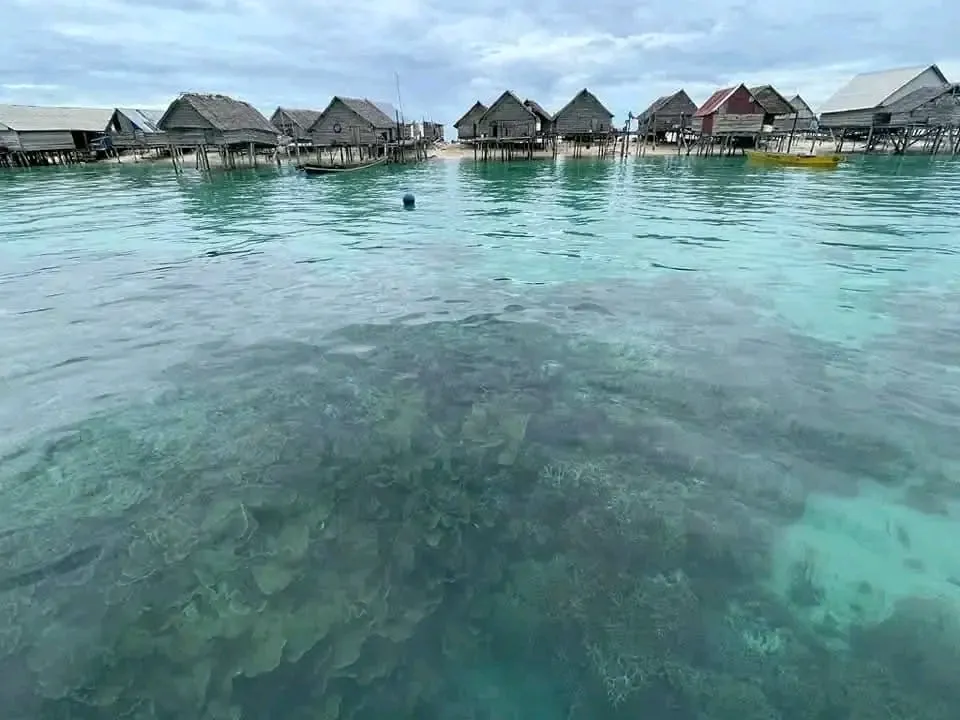
Bajau Tribe Village and Sandbar Bajau Village add a human dimension to nature travel. The coastal environment is not empty scenery; it is connected to identity, work, movement, and community life. Travelers should enter these places as guests. Ask permission before photographs, follow the local host, and avoid framing residents or homes as decorative background for an adventure story.
Community arrangements are operational details that require current confirmation. Ask who coordinates the visit, what areas are open, whether a contribution is expected, and how the group should behave. A short visit can be valuable when it allows listening and learning, but it loses that value when visitors arrive only to take quick pictures and leave without respecting local boundaries.
Choosing the Right Adventure Level
Nature travelers do not all need the same degree of physical challenge. A route centered on lakes and Meleura may suit travelers who want outdoor scenery with measured activity. A route including Angel Cave or Laumehe Cave may require more careful movement. A heritage-focused visit to Liang Metanduno adds responsibility rather than a simple difficulty rating. Ask for a plain description of the approach, ground conditions, distance from the vehicle, rest points, and guide support.
Families, older travelers, and people with mobility concerns should discuss the route before payment. Photographers may prefer fewer locations with longer stops. Experienced hikers may want more cave or karst time, but should still follow local safety decisions. Matching the route to ability is not a limitation; it is how an adventure becomes enjoyable rather than exhausting or unsafe.
How to Build a Three-Theme Muna Adventure
A strong Muna experience can be organized around three themes: inland water, karst and heritage, and coast with community context. The first theme may use Napabale Lake or one of the Moko locations for a calm introduction. The second can include Angel Cave, Laumehe Cave, or Liang Metanduno according to access and interest. The third can use Meleura Beach and a coordinated community visit to close the route with open space and local connection.
This sequence should remain a planning framework rather than a fixed promise. Weather, roads, sea conditions, cave access, group energy, and local availability can change the order. Protect the most important experience while leaving alternatives available. A good operator explains what is guaranteed, what depends on conditions, and how the group will be informed when a change is necessary.
Packing for Muna Nature and Adventure
Pack for changing environments rather than a single beach day. Practical shoes are important for caves and uneven routes. Sun protection, rain protection, drinking water, personal medicine, a small first-aid supply, and spare clothing can help the group respond to weather and activity changes. A dry bag may be useful for local boat movement, but confirm equipment needs with the operator instead of assuming what is included.
Bring only what the route requires and avoid disposable items when waste facilities are uncertain. Keep cameras and phones secure near water, and do not carry equipment that encourages visitors to touch or approach heritage surfaces. Preparation should make the journey lighter and safer, not turn a natural destination into a heavy equipment checklist.
Responsible Adventure Is Part of the Experience
Responsible travel on Muna begins with the understanding that lakes, caves, beaches, heritage sites, and villages are not disposable products. Carry waste until a suitable disposal point, avoid damaging plants or rock, follow cave access rules, and do not remove stones, shells, or cultural material. At coastal villages, ask before photographing and accept local limits without argument.
The language used in promotion matters as well. Avoid calling a place untouched or secret when people already live and work there. Avoid claiming a cave is safe for everyone or that a beach guarantees a particular water activity without current evidence. Honest descriptions protect visitors, host communities, and the destination itself.
Questions to Ask Before Booking an Adventure Route
Ask which exact sites are included, how the group reaches each site, what transport is used, and whether guides, tickets, meals, accommodation, and local contributions are included in the quoted price. Ask about the physical demands of caves, the current condition of roads and shorelines, weather alternatives, and the rules for photography at heritage locations.
Also ask how the operator responds when conditions change. A flexible route is a strength when the change is explained and the group receives a reasonable alternative. Confirm the final duration and group size separately from the editorial sequence because a long article can describe a full destination theme even when a commercial package covers only selected stops.
The Best Muna Adventure Is the One That Fits
Muna rewards travelers who choose depth over speed. The strongest route may include fewer places but allow enough time to understand a lake, move carefully through a cave, observe a heritage site, rest on the coast, and meet a community through proper coordination. This approach creates a more coherent experience than collecting attraction names without considering how they connect.
Nature and adventure travelers can therefore build a journey around what they genuinely want: still water, limestone exploration, ancient evidence, coastal scenery, photography, or maritime culture. The final plan should be verified with the operator, but the editorial foundation is clear. Muna’s strength lies in the relationship among its landscapes, not in a single claim that one activity is the best for everyone.
How to Judge Whether an Experience Is Worth the Journey
A destination is worth including when the experience matches the reason a traveler is making the trip. Napabale Lake is valuable for travelers who want to understand the relationship between inland water and the coast, not only for people looking for a swimming stop. Angel Cave is valuable for visitors who enjoy guided limestone exploration and can move carefully, not for anyone expecting a fully equipped attraction. Liang Metanduno is valuable because it connects a physical cave with rare heritage evidence, not because it provides a dramatic background for unrestricted photos.
The same principle applies to Meleura and the Bajau villages. Meleura can be a meaningful coastal pause when the group gives attention to karst, water, community tourism, and current conditions. A village visit can be valuable when it is coordinated and respectful, but it should not be measured only by how many photographs a visitor brings home. This way of judging a destination helps travelers choose with clearer expectations and helps the operator design a route that has purpose instead of simply adding more names to a schedule.
Leave the Island with Better Questions
The most useful outcome of a Muna adventure may be a better set of questions for the next trip. Ask which locations are managed locally, how access is maintained, what visitors are allowed to do, and which parts of the route are seasonal or weather-dependent. Ask how research and heritage information are interpreted, and whether local guides have a role in explaining the destination. These questions turn a short visit into a more informed relationship with the place.
For Laode Traphel, the same questions can improve future package information. After a departure, record the actual route, facilities, transfer conditions, physical demands, and community arrangements with dates and clear evidence. Update the article when operational facts change, while keeping research claims tied to their original sources. A nature and adventure article becomes genuinely useful when it can inspire travel and also prepare readers for the decisions they will make on the ground.
Frequently Asked Questions
What are the best Muna Island experiences for nature travelers?
The strongest options include Napabale Lake, the Moko lake locations, Angel Cave, Laumehe Cave, Liang Metanduno, Meleura Beach, and coordinated visits to Bajau coastal communities. The right combination depends on access and the group’s interests.
Is Muna Island suitable for adventure travelers?
Yes, especially for travelers who enjoy varied landscapes and guided exploration. Cave visits may involve uneven conditions, while coastal activities depend on weather and sea conditions.
Are Muna caves suitable for everyone?
Not automatically. Confirm walking surfaces, physical demands, access conditions, guide support, and current weather before including a cave in the itinerary.
Can adventure travel include cultural experiences on Muna?
Yes. Liang Metanduno provides a heritage context, while Bajau villages provide living maritime community context. Both require respectful behavior and local coordination.
What should I confirm before booking?
Confirm the exact destinations, transport, duration, group size, accommodation, meals, entrance fees, guide support, physical requirements, weather alternatives, and community-visit arrangements.
Plan your journey with Laode Traphel.
You May Also Like
.webp)
A Complete Wakatobi Diving Guide for Exploring Underwater Reefs
Wakatobi
.webp)
The Best Marine Experiences to Discover Across Wakatobi
Wakatobi
The Best Caves and Natural Attractions to Explore Around Baubau
Baubau, Buton
10 Amazing Places to Explore in Wakatobi for an Unforgettable Journey
Wakatobi
A Complete Wakatobi Travel Guide for Exploring Islands Reefs and Culture
Wakatobi
5 Beautiful Islands to Explore During Your Wakatobi Adventure
Wakatobi