
.webp)
The Most Beautiful Caves and Ancient Heritage Sites on Muna Island
A heritage-aware guide to Muna caves, karst landscapes, ancient art, and responsible exploration.
Explore Angel Cave, Laumehe Cave, Liang Metanduno, and the wider Muna cave heritage landscape with accurate context and practical guidance.
Muna Island’s caves are important for two different reasons. Some are natural environments that invite careful exploration through limestone terrain, changing light, and enclosed spaces. Others carry archaeological or cultural significance and must be visited with stronger conservation awareness. Treating every cave as the same kind of adventure would make the story less accurate and could encourage behavior that harms fragile surfaces.
This guide separates Angel Cave and Laumehe Cave from Liang Metanduno and the wider Liang Kabori heritage landscape. It explains what a traveler can reasonably expect, what current research establishes, which claims should be avoided, and how to prepare for a respectful visit. Access, fees, facilities, guide arrangements, and opening conditions still require local confirmation.
Why Muna Caves Need More Than a Beauty Ranking
Calling a cave beautiful can describe a first impression, but it does not explain the place. A cave may be valuable for its limestone form, its water, its shelter, its archaeological evidence, its local stories, or several of these at once. Muna’s project data identifies Angel Cave, Laumehe Cave, Liang Metanduno Ancient Cave Art, and other cave-related destinations as separate entries. Keeping those names distinct helps readers understand that each visit has a different purpose.
A responsible guide therefore avoids declaring one cave permanently the best. The more useful question is which cave fits the traveler’s interest and ability. Nature visitors may prefer a guided formation walk, while heritage travelers may prioritize documented rock art and interpretation. Both experiences deserve accurate language and local guidance.
Angel Cave: Limestone Exploration with Practical Preparation
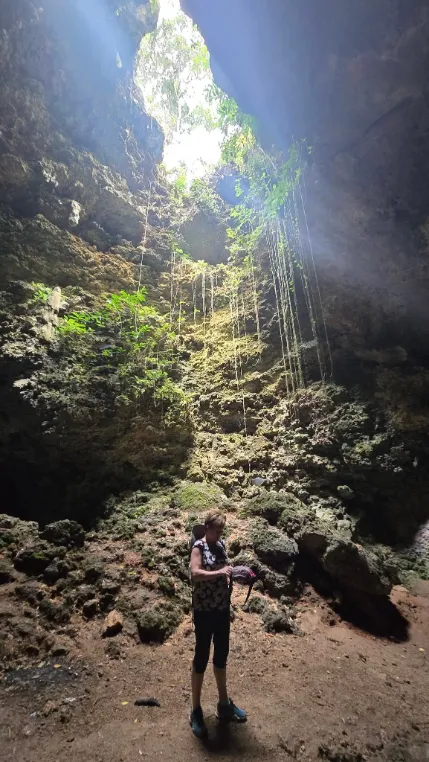
Angel Cave gives visitors an enclosed landscape experience that feels different from Muna’s lakes and beaches. The route should be approached as guided nature exploration, not as casual indoor sightseeing. Uneven ground, darkness, moisture, narrow passages, and changing weather can affect the approach. Practical footwear and attention to the guide’s pace are more important than trying to move quickly through the site.
The project confirms Angel Cave as a named destination with a dedicated image asset, but it does not establish a universal walking time, difficulty rating, facility list, or opening schedule. These details should be confirmed before the visit. Visitors should stay on the appropriate route, avoid touching cave surfaces, and carry waste out when disposal facilities are not clear.
Laumehe Cave: A Different Cave Experience
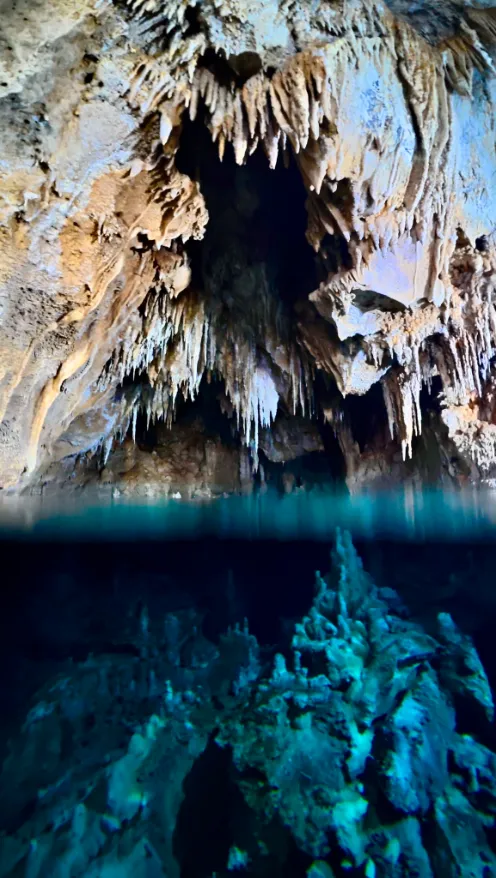
Laumehe Cave belongs to the same broad limestone story as Angel Cave but remains a separate destination. That difference matters when an itinerary is prepared. The best route, approach, ground condition, and suitable visit length may not be the same. Travelers should ask the operator how Laumehe is currently accessed and whether a local guide is required or recommended.
A cave visit can feel adventurous because it changes the scale of the landscape. Open horizons become rock ceilings, daylight becomes a limited resource, and careful footsteps replace an easy shoreline walk. Visitors should not remove formations, scratch surfaces, leave food, or treat the cave as a place for unsupervised exploration.
Liang Metanduno and the Importance of Precise Research
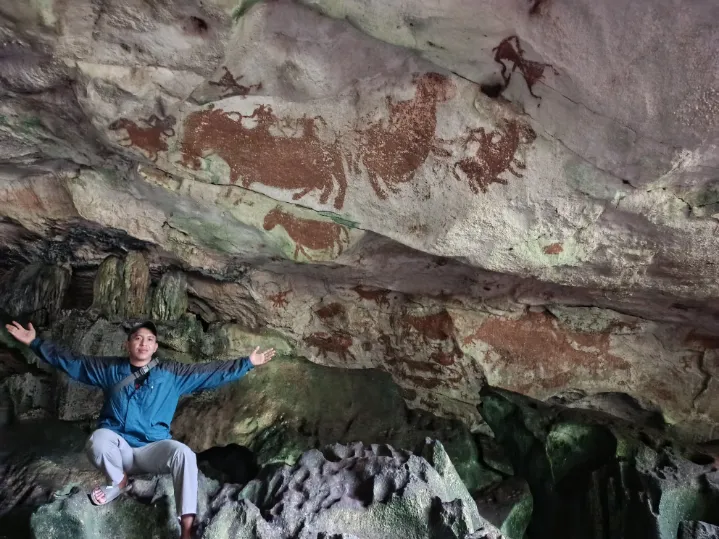
Liang Metanduno is significant because it connects Muna’s cave landscape with research on ancient human expression in Sulawesi. A Nature study published in 2026 reported LA-U-series dating of calcite overlying a hand stencil. The dated calcite was reported at approximately 71.6 plus or minus 3.8 thousand years, providing a minimum-age constraint of about 67.8 thousand years for the underlying motif.
The wording must remain precise. The result concerns the studied hand stencil and the dated overlying calcite. It does not establish that every image on Muna is 67.8 thousand years old, and it does not directly identify the individual people who made the motif. A good travel article should preserve that distinction instead of turning a specific research result into a generalized advertising claim.
How to Visit Ancient Rock Art Responsibly
Ancient cave art requires behavior that is stricter than ordinary sightseeing. Do not touch, wet, trace, chalk, scratch, or lean equipment against painted or potentially archaeological surfaces. Oils, dirt, moisture, and accidental contact can damage material that cannot be replaced. Follow local rules about distance, group size, lighting, flash, and photography.
Visitors should listen to local guides or heritage interpreters before drawing conclusions from a motif. A photograph may show the visible surface, but it cannot explain dating methods, conservation condition, or cultural meaning. The best souvenir from Liang Metanduno is understanding, not a fragment, mark, or careless image.
Liang Kabori and the Wider Heritage Landscape
Research on the Liang Kabori area places cave and shelter sites within a wider Muna rock-art landscape. Academic work has documented figurative and nonfigurative motifs, showing that the heritage story is not limited to one chamber or one image. Liang Kabori should not be used as a substitute name for Liang Metanduno, but it helps readers understand that Muna’s cave heritage has geographic and visual breadth.
For travelers, the wider landscape is a reason to ask which site is actually open and what kind of interpretation is available. Not every cave should automatically be called an archaeological site, and not every rock surface should be treated as a tourist display. Site-specific evidence and local conservation guidance must lead the visit.
Karst Forms and the Natural Beauty of Cave Country
Muna’s cave environments are part of a karst setting shaped by soluble rock, water, cavities, shelters, and exposed formations. Travelers can notice how the rock controls light, movement, sound, and shelter without making unsupported claims about the age or formation of every surface. This geological perspective adds depth to a nature visit while leaving archaeological interpretation to the evidence available for each site.
A guide can help separate natural formation from cultural material. That distinction is important because a visitor may see a dramatic wall, a calcite surface, and a painted panel in the same environment, even though each requires a different kind of care. Observe the whole setting, but follow specific rules wherever heritage material is present.
Planning a Cave Day on Muna Island
A cave day should not be planned like a sequence of quick viewpoints. Confirm the approach, vehicle access, walking surface, guide support, lighting, weather sensitivity, and rest opportunities. If the group wants to visit Angel Cave, Laumehe Cave, and Liang Metanduno, ask whether the route distances and physical demands make that combination realistic.
Rain can affect trails and cave entrances, while group stamina can determine whether a second cave remains comfortable. Leave time for careful movement and explanation. A flexible order is safer and more honest than promising that every cave can be completed on a fixed schedule.
What to Bring for Cave Exploration
Practical shoes with good grip, drinking water, rain protection, personal medication, and a small first-aid supply are sensible preparations. Bring a light only if the operator confirms that it is appropriate and does not conflict with site rules. Keep cameras, phones, and bags from contacting rock surfaces, and protect equipment from water where necessary.
Do not bring tools for collecting stones, scraping walls, or handling formations. Avoid food inside sensitive areas, and carry all waste back out. Preparation should support safe observation, not encourage visitors to interact physically with a fragile cave.
Caves for Different Types of Travelers
Nature travelers may prefer Angel Cave or Laumehe Cave for the change from open landscape to limestone exploration. Heritage travelers may place Liang Metanduno first, but should expect a more careful and interpretive visit rather than an unrestricted adventure activity. Families and older travelers should ask about uneven ground, distance, shade, rest points, and whether a cave is appropriate for every member of the group.
Photographers should discuss lighting and flash before arrival. A group interested in content creation must not allow cameras to override conservation rules or local privacy. The strongest image is one that identifies the correct site, uses accurate context, and does not put a surface, resident, guide, or fellow visitor at risk.
Community Guidance and Heritage Protection
Local guides are important because they can connect access decisions with local knowledge and current conditions. They may explain which route is open, where visitors may stand, how to behave near art, and which stories are supported by local memory or research. Travelers should listen and avoid treating guidance as an obstacle to the experience.
If a village or community host is involved in the route, ask permission before photographs and respect private spaces. Heritage and community travel are both based on consent. A cave visit is not successful if the surface survives but the people who host the destination are treated without respect.
How Cave Heritage Fits a Wider Muna Journey
Muna caves can be combined with lakes and coast when the itinerary gives each environment its own role. Napabale Lake or a Moko location can introduce the island through water. Angel Cave or Laumehe can provide guided natural exploration. Liang Metanduno can add heritage interpretation, while Meleura Beach can provide a calmer coastal pause. The route should not force every stop into one day.
The best order depends on access, weather, physical demands, local coordination, and the importance of protecting a particular site. A local operator should confirm what is practical and which stops are guaranteed. Editorial description can explain the relationship among places, but the booking confirmation must define the actual route.
Questions to Confirm Before Booking
Ask which cave is included by its exact name, how far the group walks, whether a guide is provided, and what footwear or equipment is required. Confirm current opening arrangements, entrance fees, photography rules, lighting restrictions, road conditions, and weather alternatives. For Liang Metanduno, ask how access and conservation are managed.
Also ask whether the commercial package includes transport, accommodation, meals, local guide support, and any community contribution. These details can change and should not be invented from a general destination description. Clear questions protect the traveler and help the operator present a more accurate product.
Final Perspective on Muna Cave Heritage
Muna’s caves are compelling because natural beauty and cultural evidence exist within the same wider landscape, but they should never be treated as interchangeable attractions. Angel Cave and Laumehe Cave invite guided exploration of limestone environments. Liang Metanduno asks visitors to think about ancient expression and scientific evidence. Liang Kabori expands the view toward a broader cave and shelter heritage landscape.
Travelers who move carefully, listen to local guidance, protect surfaces, and use precise language can experience these places without reducing them to a checklist. The value of a Muna cave journey comes from seeing how geology, human history, community knowledge, and responsible tourism meet in one destination.
How to Read Dating Evidence Without Overclaiming
Research about ancient cave art often involves relationships between a motif and the material around it. In the Liang Metanduno study, the reported minimum-age interpretation comes from calcite overlying a studied hand stencil. That relationship allows researchers to establish an important chronological constraint, but it does not mean that the calcite and the stencil are the same material or that every visible motif has received the same analysis. A responsible article should preserve the difference between a dated layer, an underlying image, and a broader interpretation of human presence.
This distinction is useful for travelers because heritage sites are often simplified in promotional writing. A guide may say that a site is extremely old, but a careful explanation identifies what the research actually tested. Readers can appreciate the significance without being given a false level of certainty. The same rule applies to claims about who made the art, why it was made, and how people moved through the landscape. Those questions may involve archaeological interpretation, regional comparison, and local knowledge rather than one simple answer.
Visitors do not need specialist training to behave responsibly. They only need to understand that a research site contains evidence that is limited, fragile, and valuable. Listen to qualified interpretation, avoid inventing stories for photographs, and share captions that keep the evidence attached to the correct location. This is a small but meaningful contribution to heritage protection.
Designing a Heritage Visit That Does Not Feel Rushed
A heritage visit needs time for arrival, orientation, movement, observation, explanation, and departure. If the group is given only a few minutes inside a cave, the experience may become a photograph stop rather than a meaningful encounter. The operator should explain how long the approach takes, where the guide begins, and whether visitors can pause without blocking other people or entering restricted areas. A slower route is often more useful than a longer list of caves.
The group should also be prepared for silence and attention. A cave may not offer the same entertainment as a beach or a viewpoint, but its value can come from seeing a surface carefully, understanding how researchers interpret it, or hearing a local explanation of the surrounding landscape. Travelers should not pressure guides to create dramatic stories or allow closer access than conservation rules permit.
After the visit, leave the site as it was found. Check that no rubbish, food, equipment, or personal item has been left behind, and do not take natural or cultural material as a souvenir. Record the name of the exact cave and the source of any historical claim so future content remains accurate.
A Heritage Checklist for Operators and Readers
Before confirming a cave route, ask whether the destination is being promoted primarily as a natural cave, a documented heritage site, or both. Confirm the exact name, the access route, the current guide arrangement, and any visitor limits. Ask whether photography is allowed, whether flash is restricted, and how the operator responds when rain or other conditions make the approach unsuitable. These questions are not signs of doubt; they are part of responsible product preparation.
The page should also keep stable and changeable information separate. The existence of a named cave and a verified project image may be stable editorial information. A fee, opening hour, road condition, guide roster, or permitted activity can change and should be dated or confirmed before publication. This separation prevents a well-researched article from accidentally presenting old logistics as current fact.
For readers, the checklist creates a practical bridge from inspiration to booking. They can compare the published route with the actual package, ask which sites are guaranteed, and understand what they need to bring. For the community and heritage site, it reduces the chance that visitors arrive unprepared or expect access that local managers cannot provide.
Why Careful Guidance Improves the Visitor Experience
Rules around caves and ancient art are sometimes presented as restrictions, but good guidance can make the visit more rewarding. When visitors know why a surface must not be touched, why a group must remain small, or why a guide controls the route, they can pay attention to the evidence rather than feeling excluded from it. The boundary becomes part of the story: this is a place where access must be balanced with the survival of material that belongs to future visitors and researchers as well.
The same principle applies to local interpretation. A guide who explains the difference between a natural cave and a documented heritage site helps travelers see more clearly. A host who describes community expectations prevents awkward encounters. An operator who explains weather alternatives protects the group from treating a printed itinerary as more important than real conditions. Careful preparation does not reduce adventure; it gives the adventure a stronger foundation.
Muna’s cave destinations are therefore best promoted through accuracy and attention. Angel Cave and Laumehe Cave can offer the physical feeling of exploration. Liang Metanduno can introduce ancient evidence and the discipline of heritage protection. Liang Kabori can provide a wider landscape context. Together they create a route that is richer than a simple ranking of beautiful caves, provided each place is described according to what the data and research actually support. This approach respects the destination, supports local guides, and gives readers confidence in the information they use before departure.
Frequently Asked Questions
Which caves and heritage sites are listed for Muna Island?
The project identifies Angel Cave, Laumehe Cave, Liang Metanduno Ancient Cave Art, and the wider Liang Kabori cave heritage landscape.
Why is Liang Metanduno important?
A 2026 Nature study reported a minimum-age constraint of about 67.8 thousand years for a studied hand stencil based on dating overlying calcite.
Can visitors touch ancient cave art?
No. Visitors should not touch, wet, mark, scratch, or lean against rock art or archaeological surfaces.
Are Muna caves suitable for everyone?
Not automatically. Confirm walking conditions, access, guide support, and physical demands before including a cave in the route.
Plan your journey with Laode Traphel.
You May Also Like
Binongko Island Travel Guide for Discovering Traditional Island Culture
Binongko, Wakatobi
Exploring Ancient Cave Art and Cultural Heritage on Muna Island
Muna
.webp)
The Best Cultural and Historical Experiences to Discover on Muna Island
Muna
The Best Cultural and Historical Destinations to Visit in Buton
Buton Island and Baubau
10 Amazing Places to Explore in Wakatobi for an Unforgettable Journey
Wakatobi
A Complete Wakatobi Travel Guide for Exploring Islands Reefs and Culture
Wakatobi